Delivery notes: what is the difference with an invoice?
A delivery comes with a slip of paper listing what should be in the box, and that is the delivery note. It looks like an invoice, it comes from the same supplier and it carries the same items, but it does something entirely different. Confuse the two and you book costs twice or reclaim VAT that has not been invoiced yet. Below you will find what a delivery note is and is not, and how to keep track of them.
What exactly is a delivery note?
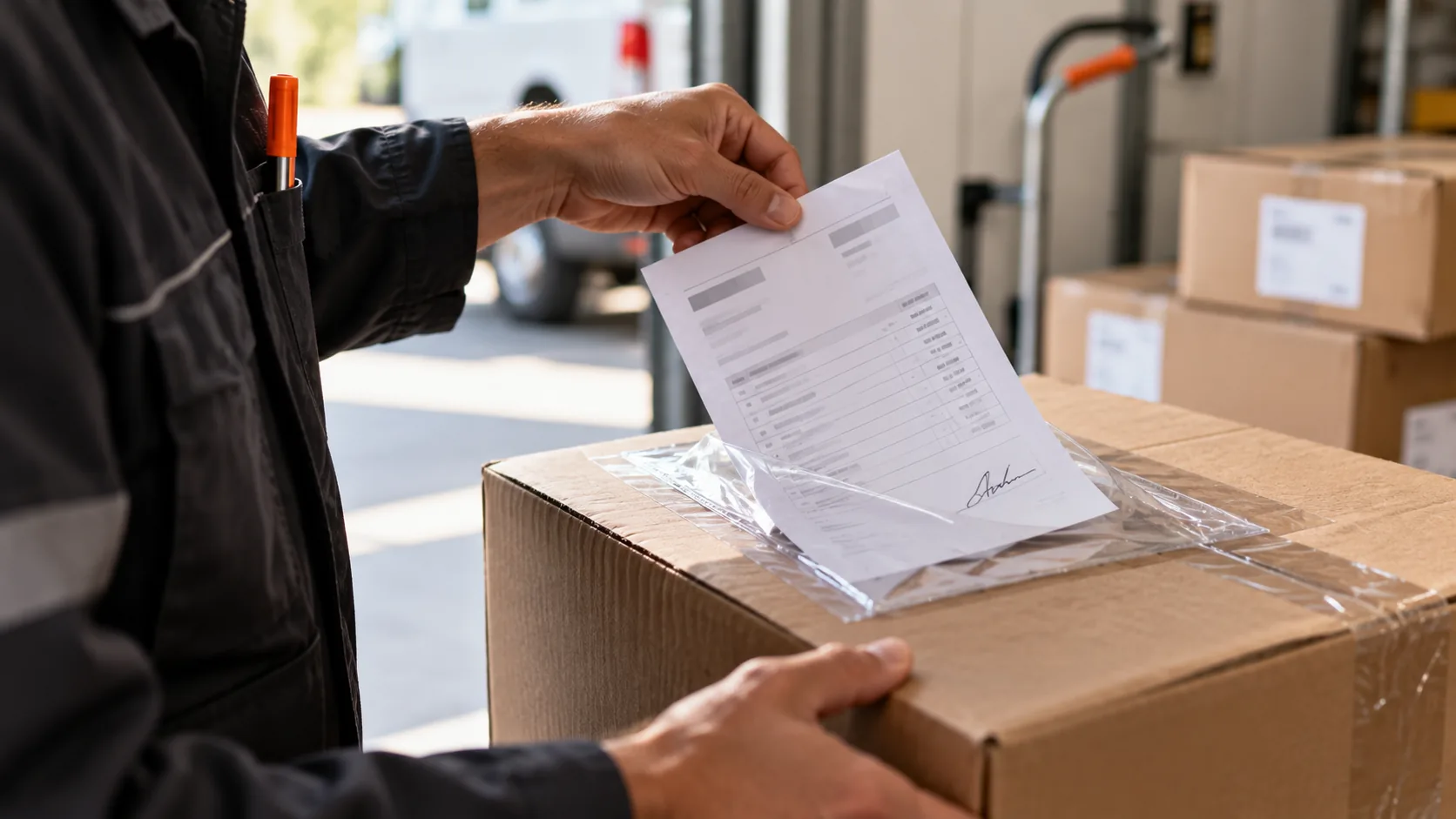
A delivery note is a shipping document: it travels with the goods and states what is in the consignment. It lists items and quantities, usually an order number, and often no prices. Its purpose is to let the recipient check whether the delivery is complete and nothing is damaged.
An invoice is a payment document: it says what you owe, with amounts, VAT and a payment term. The delivery note is about WHAT was delivered, the invoice about WHAT it costs. They belong together, but they are two steps in the same process.
In practice the two often diverge in time. A supplier delivers this week and invoices all deliveries together at the end of the month. One invoice then covers three or four delivery notes, and that is precisely why you have to keep them apart.
Can you reclaim VAT on a delivery note?
No. VAT deduction requires an invoice that meets the legal requirements, and a delivery note does not: it usually carries no amounts, no VAT rate and no invoice number. So never book a delivery note as a purchase invoice, however complete it may look.
Some suppliers send a document that is delivery note and invoice at once, with the items as well as the amounts and the VAT. That is allowed, and then it simply is an invoice. So look at what the document contains rather than at what is printed at the top: the word delivery note says nothing in itself.
The opposite mistake happens too: booking the delivery note as an invoice and then the real invoice alongside it later. The same costs then sit in your books twice and neither your result nor your VAT return adds up any more. That often only shows when the supplier balance stops reconciling.
Why does the delivery note still matter for your records?
The delivery note is your evidence of what actually arrived. If an invoice comes later showing more than you received, the signed delivery note is the only document with which you can demonstrate that. Without one you are empty-handed in that discussion.
On project work it counts twice over. Materials delivered to a job belong to that job, and the delivery note is the moment that gets recorded. Anyone who links the delivery note to the project straight away knows later exactly which materials went to which job and can pass them on correctly.
And with part deliveries it is indispensable. If an order arrives in three consignments, three delivery notes together say what is complete and what is still outstanding. The invoice at the end of the month says nothing about that.
How do you match a delivery note to the invoice that follows?
Through the order number. Both the delivery note and the invoice normally refer to the same purchase order, and that number is the thread between the two. If it is missing from the delivery note, ask the supplier to add it, because without that reference it becomes a manual search.
When the invoice arrives, check that the quantities match the delivery notes. This is known in practice as three-way matching: the purchase order says what you ordered, the delivery note what you received, the invoice what you pay. Where those differ, that is a reason not to pay until it lines up.
Keep the delivery note digitally and with the purchase, not in a separate pile. A delivery note in a drawer next to the workbench is gone by the time the invoice arrives three weeks later, and then you check nothing in practice and pay on trust.
Do you have to keep delivery notes, and for how long?
Delivery notes are part of your records, and so they fall under the Dutch retention obligation. They are part of the story behind a purchase: the order, the delivery and the invoice belong together, and together they show that the costs were genuinely incurred.
Digital retention is allowed, just as with receipts, as long as the stored version is a faithful representation of the original and stays legible and accessible for the whole retention period. So scan the signature for receipt along with it, because that part in particular is what makes the delivery note evidence.
If you are unsure how long a specific document has to be kept, look at what it belongs to rather than at the document itself. If the delivery note belongs to an investment for which a longer term applies, that term applies to the surrounding paperwork too. Have your bookkeeper check that if you are in doubt.
Frequently asked questions
What is the difference between a delivery note and an invoice?
A delivery note is a shipping document and states what is in the consignment, usually without prices. An invoice is a payment document with amounts, VAT and a payment term. One invoice often covers several delivery notes, because suppliers invoice per period.
Can I reclaim VAT on a delivery note?
No. VAT deduction requires an invoice that meets the legal requirements, and a delivery note usually carries no amounts, no VAT rate and no invoice number. If it does carry them, the document is effectively an invoice, regardless of what is printed at the top.
Do I have to keep delivery notes?
Yes, they are part of your records and fall under the retention obligation. Digital retention is allowed as long as the stored version is a faithful representation and stays legible and accessible. Scan the signature for receipt along with it, because that part is what makes the delivery note evidence.
This article is general information, not tax or legal advice. When in doubt, consult an adviser; rules can change.
More on these topics
More from this category
- Scanning receipts: from till slip to books that add upHow do you scan receipts so they count for VAT and the retention obligation? What has to be legible, when the paper can go, and what commonly goes wrong.
- Multilingual staff and the books: how do you keep control?Does your team work in several languages? Read how to keep the books in one place and by Dutch rules, without confusion caused by language.
- Bookkeeping in your own language: the language barrier in adminDutch bookkeeping rules are already tricky, let alone in a foreign language. Read what mistakes this causes and how a multilingual interface helps.