Starting as a freelancer in the Netherlands: full 2026 checklist
Starting as a zzp'er (a Dutch self-employed professional without staff) means arranging quite a lot in a short time: a registration, an account, insurance, and bookkeeping that is correct from day one. This checklist walks you through it step by step, so you do not forget anything and can start invoicing professionally quickly.
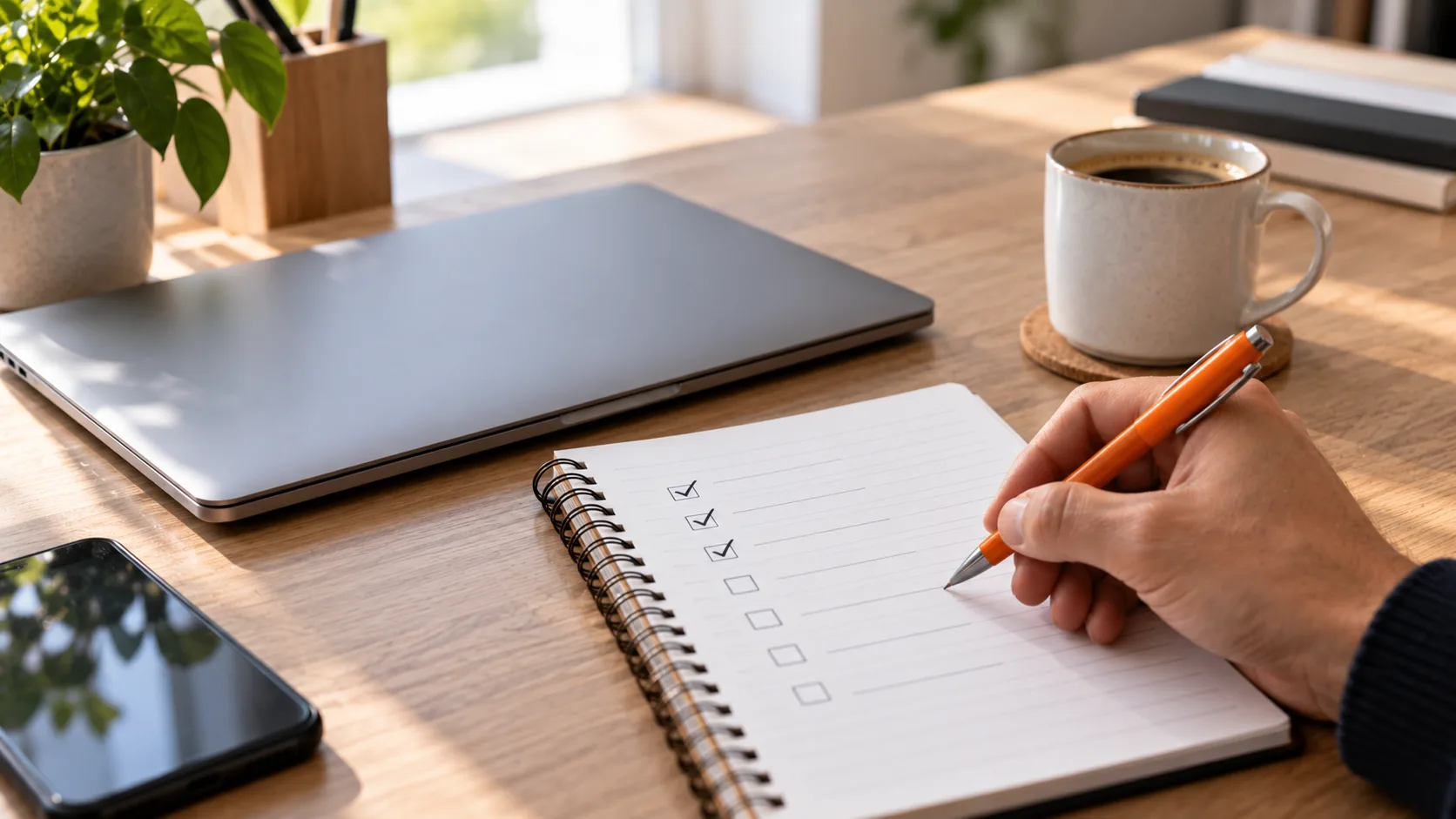
Step 1: register with the Kamer van Koophandel
The first official step is registering with the Kamer van Koophandel (KvK, the Dutch Chamber of Commerce), which gives your business a KvK number. This can be done online or by appointment at a KvK office, and is usually arranged within a few days.
During registration you also choose a legal form, for most starting freelancers this is the sole trader (eenmanszaak). You also choose a business name and describe the activities you will carry out, which partly determines which SBI code (a standard code for your business activity) you receive.
After registration, the KvK automatically passes your details to the Belastingdienst, which then assesses whether you are assigned a VAT ID.
Step 2: sort out your VAT ID and VAT number
Shortly after your KvK registration, you receive a VAT ID from the Belastingdienst (the number you state on invoices to clients) and a separate VAT number for your returns. These numbers are not the same, so pay attention to which one you use where.
Do you qualify for the small businesses scheme (KOR), a VAT exemption for low annual revenue? Then you can register for it separately with the Belastingdienst. This is a choice, not something automatic.
Not sure whether the KOR suits your situation? Work out your expected revenue and costs, and check the current conditions with the Belastingdienst before making a decision.
Step 3: a business account and insurance
A separate business bank account is not a legal requirement for every legal form, but it is strongly recommended. It keeps your private and business money flows separate, which makes your bookkeeping and VAT return much clearer.
Also think about insurance that suits your profession. Common options are professional liability insurance (AVB), an income protection insurance in case of illness (AOV, arbeidsongeschiktheidsverzekering), and possibly legal expenses insurance.
Insurance is not a legal requirement for most freelancers, with the exception of some professions. Weigh the risk of your work against the cost of insurance, and ask for advice if needed.
Step 4: set up your bookkeeping from day one
Start your bookkeeping on the day you begin, not once the first invoice comes in. In many cases you can still (partly) deduct costs you incurred before starting, such as equipment, so keep those receipts as well.
Choose a system that keeps invoices, expenses and VAT organised, instead of loose Excel files and a shoebox of receipts. This saves you a lot of sorting-out work at your first quarterly return.
TelMaar is built specifically for freelancers and small businesses that want to invoice and keep their books correctly under Dutch rules from the start, with an interface that stays accessible even if Dutch is not your first language.
Step 5: send your first invoice
Before you send your first invoice, check that all mandatory details are on it: your VAT ID, KvK number, a sequential invoice number, the invoice date, a clear description, and the VAT amount stated separately from the amount excluding VAT.
Set up a logical numbering scheme, for example starting at 2026-001, and keep this sequence consistent. This prevents questions if the Belastingdienst ever carries out an audit.
Send the invoice with a clear payment term, 30 days by default unless you agree otherwise, and note straight away when you want to send a reminder if payment does not come in.
Frequently asked questions
How much does registering with the KvK cost?
There is a one-off fee for registering with the KvK. Check the current amount on the Kamer van Koophandel website, as it changes from time to time.
Do I need a business account as a starting freelancer?
For a sole trader it is not always a legal requirement, but it is strongly recommended to keep private and business finances separate and your bookkeeping organised.
When do I need to file my first VAT return?
That depends on the filing period the Belastingdienst assigns you, usually quarterly. You will be notified of this after registration, so check the deadline in your Mijn Belastingdienst Zakelijk environment.
This article is general information, not tax or legal advice. When in doubt, consult an adviser; rules can change.